
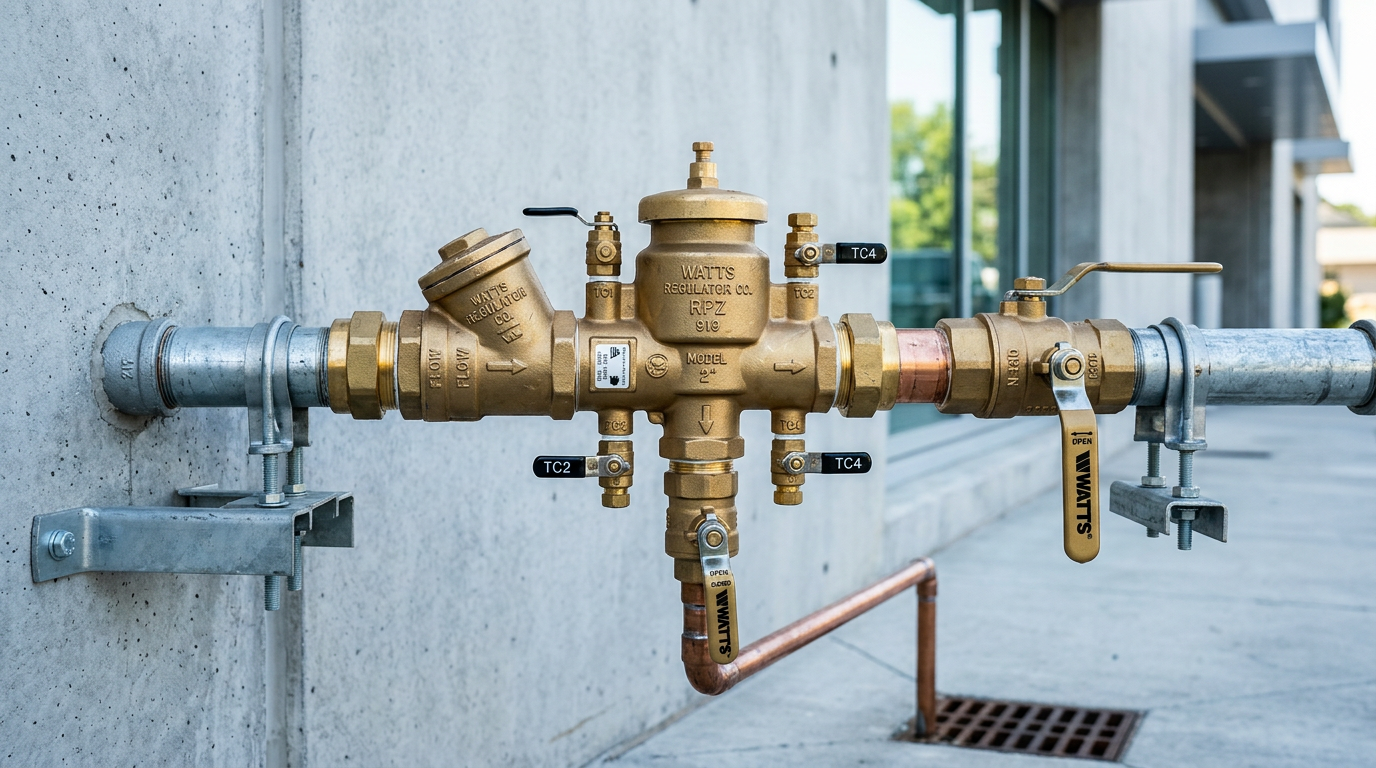
Backflow is the accidental reversal of water flow in a plumbing system — when water travels backwards from a property into the public water mains. It sounds harmless, but it’s how contamination outbreaks start. Chemicals from a commercial cleaner, fertiliser from a garden hose left in a bucket, pool water, even raw sewage from a cross-connection can all end up in the drinking water supply if backflow isn’t prevented. Which is why in NSW, backflow prevention isn’t optional — it’s regulated.
When does backflow actually happen?
Two situations cause backflow in a real-world Sydney context:
- Back-pressure — when the pressure inside a property’s plumbing (from a pump, a hot water system, a boiler or an elevated tank) becomes higher than the pressure in the mains, pushing water backward out of the property.
- Back-siphonage — when the mains pressure drops suddenly (a burst main, firefighting nearby, mains shutdown for works) and the drop is strong enough to suck water from a property’s plumbing back into the mains. Imagine a garden hose left in a bucket of detergent during a mains drop — that detergent ends up in the supply.
Sydney Water’s hazard-rating system
Sydney Water classifies every property connection into one of three hazard ratings based on what’s on the property and the level of risk it poses to the public supply:
High hazard — requires a testable RPZ device
Reduced Pressure Zone (RPZ) backflow prevention devices are required on properties such as: hospitals, dental surgeries, car washes, commercial laundries, industrial premises, funeral homes, morgues, chemical handling facilities, irrigation systems with injected fertiliser, properties with private water sources (bores, rainwater tanks with cross-connections), and service stations.
Medium hazard — requires a testable Double Check Valve (DCV)
Most commercial premises, restaurants and cafes (through the kitchen — dishwashers, ice machines, beverage systems), hairdressers, veterinary clinics, large residential complexes with pool equipment, and properties with rainwater tanks that have an indoor connection.
Low hazard — requires a non-testable dual check valve
Most standard residential properties with a garden tap. You almost certainly already have one — it’s usually built into the meter assembly installed by Sydney Water.
So do I need one?
Here’s the practical answer for Sydney 2026:
- Standard single-dwelling residential (no pool, no tank, no irrigation injection): the dual check valve Sydney Water provided with your meter is usually sufficient. Nothing further required.
- Residential with a pool or rainwater tank plumbed inside: medium hazard — a testable DCV is legally required on the mains inlet, and it must be tested annually by a licensed backflow tester.
- Any commercial premises: almost certainly medium or high hazard. Sydney Water audits these and sends formal letters demanding compliance.
- Any property with a fire service connection — required to have a separate RPZ on the fire line, tested annually.
Annual testing — what it involves
Testable backflow devices (DCV and RPZ) must be tested at installation and then every 12 months by a plumber who holds both a plumbing licence and a current NSW backflow prevention endorsement (qualification code PMBBPT003). Sydney Water records the test results on the property file; a failed test requires the device to be repaired or replaced, and a re-test lodged, typically within 30 days.
Pricing for backflow testing and device replacement depends on the device type and size, hazard rating, accessibility, and whether the failed device can be rebuilt with a seal kit or needs full replacement. Larger commercial and fire-service devices cost substantially more than a small domestic unit. We provide a written quote after a quick site inspection — just send us the Sydney Water letter and your property address.
Sydney Water issues infringement notices for non-compliance. They usually start with a letter and a deadline, but fines for ongoing non-compliance can reach into the thousands, and in serious cases they’ll cut the supply until the issue is resolved. It’s genuinely cheaper to just do it.
What a backflow test actually looks like
The test itself takes 15–30 minutes and involves temporarily isolating the water, connecting a calibrated test kit to the device’s test cocks, and measuring pressure differentials across each check valve to confirm they’re sealing to standard. A pass result means all valves held pressure; a fail usually means one of the internal seals needs replacing. Most failures are repairable in-situ for the cost of a seal kit and labour — rarely does the whole device need to be replaced.
Common backflow problems we see in Sydney
- Uncompliant DIY pool top-ups — a garden hose dropped into the pool is a classic back-siphonage risk. A hose bib vacuum breaker is a small, inexpensive part that eliminates it.
- Commercial kitchens with combination ovens and chemical dispensers fed from an uncontrolled mains — needs a DCV minimum, usually RPZ.
- Old cafes in heritage shopfronts — often have zero backflow protection and no record of ever having been tested. Easy target for a Sydney Water audit.
- Strata buildings with shared plumbing — common property backflow devices often haven’t been tested in years and fail on first test.
- Dental surgeries — high hazard by default. If you’ve taken over a practice, get the compliance audited before you take your first patient.
What to do if you get a letter from Sydney Water
- Don’t ignore it. The deadlines are real.
- Call a licensed plumber with backflow endorsement (we’ll ask for your property number and the letter reference).
- We’ll inspect the property, recommend the right device, install it with a Certificate of Compliance, conduct the initial test, and lodge the paperwork with Sydney Water.
- We’ll diarise the annual re-test and flag it 30 days before it’s due so you never get another letter.
Got a backflow letter or an overdue test? Southern Star Plumbing holds current NSW backflow prevention endorsements and handles installation, testing and lodgement for residential, commercial and strata properties right across Sydney. Call 0432 304 609 or request a quote.