
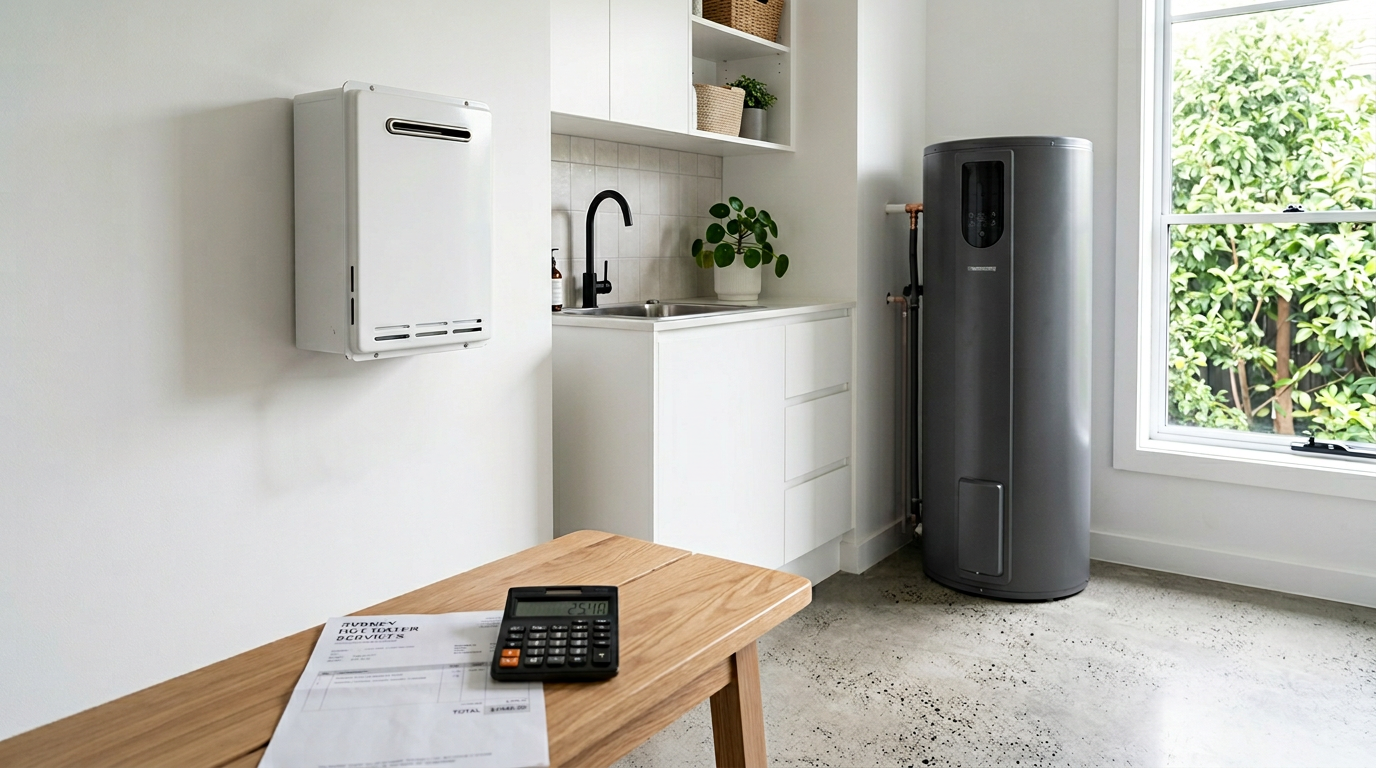
Key takeaways — the 30-second version
- Five mainstream choices for Sydney homes: electric storage, gas storage, gas continuous flow, heat pump and solar — each suits a different household.
- Two rebate schemes can apply — federal STCs for heat pumps and solar, and the NSW Energy Savings Scheme for eligible heat pump replacements. Your installer will calculate current values.
- Compare what’s included — tempering valve, isolators, compliance certificates and disposal of the old unit are mandatory line items.
- Repair vs replace: under 8 years & failed part → usually repair. Over 12 years or leaking from the tank → replace.
About pricing in this guide
The numbers below are indicative industry ranges only and move with the market, your suburb, the brand of unit, access, the existing setup and the current rebate values. They are not a quote from Southern Star Plumbing — the only price we stand behind is the written quote we provide for your specific home after seeing the job.
If you’ve gone looking for hot water replacement quotes in Sydney lately, you’ve probably hit the same wall most of our customers do: the headline numbers from different installers are wildly inconsistent. The reason is rarely the unit itself — it’s usually the line items, the brand, the rebate handling and the scope of the install. This guide explains the moving parts so you can compare quotes properly and ask the right questions.
The short answer — what affects the price
Six things drive the cost of any hot water replacement in Sydney:
- System type — electric storage is cheapest to install but most expensive to run; heat pump and solar are pricier upfront but qualify for rebates and run for far less.
- Brand and model — established Australian and Japanese brands (Rheem, Rinnai, Sanden, Reclaim, Stiebel Eltron) cost more upfront than budget imports but have proper warranties and parts supply.
- Size relative to household — under-sizing is the #1 cause of cold-shower complaints. Honest quotes size the unit to your household, not to a flat-rate “special”.
- Like-for-like vs fuel switch or relocation — replacing a unit in the same position with the same fuel is the quickest job. Switching fuels (electric to heat pump, gas storage to continuous flow) or moving the unit adds materials and labour.
- Compliance and access — a Gas Compliance Certificate, Sydney Water Notice of Work, tempering valve, isolators and disposal of the old unit are required on most jobs.
- Rebates — federal STCs and NSW Energy Savings Scheme rebates can reduce the out-of-pocket cost on heat pumps and solar — their value moves with the market and depends on your existing setup.
If a quote you’ve received sits well below others for the same system, scrutinise the inclusions before signing anything — it’s usually the line items below that have been left out, not a better deal.
Why hot water quotes vary so much in Sydney
Three legitimate reasons explain most of the spread between quotes for what looks like the same job:
- Brand and model. A Sanden Eco Plus heat pump (Japanese-engineered, 10-year warranty) and a generic-import 270 L heat pump are not the same product. Same with gas continuous flow — a Rinnai Infinity 26 and an unbranded budget unit have very different parts availability ten years from now.
- Scope of works. One quote includes the tempering valve, new isolation valves, electrical isolator, condensate drain and disposal. The other doesn’t. By the time the cheaper installer adds those at the end (or worse, leaves them out and risks failing inspection), the price gap has closed.
- Compliance certificate. Every gas hot water installation in NSW legally requires a Gas Compliance Certificate. Every plumbing installation requires a Notice of Work and Certificate of Compliance lodged through Sydney Water. Some cheap quotes skip these. They cost the installer time and money, which is why they get dropped.
The five system types — how they compare
Electric storage — the budget upfront
Cheapest to buy, most expensive to run. A 160–315 L electric tank (Rheem, Dux, Aquamax, Vulcan) is the lowest-upfront option. The trade-off is the running cost — on continuous tariff it costs noticeably more per year than every other option, and a heat pump in the same home runs at a fraction of that. Replacement is genuinely justifiable for rental properties, small apartments, granny flats with low usage, or homes where rooftop solar PV exports cover daytime element runs.
Gas storage — the disappearing default
Sydney’s middle-ring suburbs are full of these — 135–170 L gas storage units sitting next to the laundry. The major brands have largely shifted production to continuous flow, so new gas storage units are getting harder to source. If your existing gas storage unit fails, we’ll usually recommend either gas continuous flow or a heat pump rather than a like-for-like replacement — both are typically a better long-term choice.
Gas continuous flow — the workhorse
Endless hot water, no tank to corrode, 15–20-year lifespan, low daily standby loss. A Rinnai Infinity 26 or Rheem Metro 26 is the go-to in Sydney. Wall-mounted, smaller footprint than a tank, and noticeably cheaper to run than gas storage. There’s no STC or NSW ESS rebate for gas continuous flow because it’s a fossil-fuel install — the value sits in the longer lifespan and lower running cost.
Heat pump — the rebate winner for many homes
The heat pump market in Sydney has grown enormously in the last three years. Quality units (Sanden Eco Plus, Reclaim Energy, Rheem MPi, Stiebel Eltron Accelera) carry a higher headline price than electric storage but qualify for two rebate schemes that can substantially reduce the out-of-pocket cost when you’re replacing an older electric or gas storage system. Day-to-day running cost is the lowest of all the gas-or-electric options. We don’t recommend the cheapest imported heat pumps — their compressor warranties are short and parts supply is patchy.
Heat pump location matters
Heat pumps need air clearance to work efficiently — usually 300–500 mm above and around. They blow out cool air, so under-eaves or in an outdoor service area is best, not in an enclosed laundry. Condensate drainage and an electrical isolator are mandatory. If the new unit can’t go where the old electric tank was, allow for some additional materials and labour for the relocation.
Solar hot water — lowest running cost
Roof-mounted evacuated-tube or flat-panel solar systems with an electric or gas booster have the lowest day-to-day running cost of any hot water type in Sydney — a well-sized system covers most of the annual demand from sunlight. Federal STCs apply, and NSW ESS may apply for replacements of an existing electric unit. The catch is installation complexity: roof structure, panel orientation and tank placement constraints make solar the most site-dependent option, so we’ll always do a roof inspection before quoting.
NSW & federal rebates — how they work
Two rebate schemes can stack on the right install:
Federal STC rebate (Small-scale Technology Certificates)
Available for heat pumps and solar hot water nationally. The certificate value moves with the market and a Sydney install generates a number of certificates depending on system size and zone. The rebate is applied as a discount on your quote — the installer claims the certificates from the registry, you don’t. Your installer will calculate the current value when they quote.
NSW Energy Savings Scheme (ESS)
NSW-specific. Pays a rebate for replacing an existing electric storage or gas storage system with an eligible heat pump (or sometimes solar) and meeting the scheme’s eligibility criteria (existing system age, accredited installer, dwelling type). Can stack with STCs.
The fine print on rebates
Rebates only apply if your installer is an accredited Clean Energy Council (CEC) heat pump installer and the unit is on the approved product list. Two corners cheap installers cut: they’re not accredited (so no STC value passed on), or they keep the STC value rather than passing the discount through to you. Ask to see the certificate number on your quote.
The line items every honest quote should include
These items genuinely add to the job and are often missing from cut-price quotes. Don’t be alarmed if your quote shows them — that’s the quote being honest. They’ll be priced individually so you can see what each one is.
- Tempering valve / TMV. Mandatory under AS 3500.4 for residential hot water outlets to limit delivery temperature to 50°C. Required on every new install.
- Isolation valves. An isolating ball valve on the cold inlet, replaced as a matter of course since the existing one is usually seized.
- Flex hoses or hard-pipe connections. Quality stainless flex hoses, not the cheap ones that fail at 5 years.
- Electrical isolator (heat pump only). Required by AS 3000. May need an electrician if the existing circuit isn’t suitable.
- Condensate drain (heat pump only). Run to a tundish or stormwater per manufacturer specs.
- Disposal of the old unit. Council scrap charges and removal labour.
- Compliance certificates. Gas Compliance Certificate (required for gas) and Sydney Water Notice of Work / Certificate of Compliance for plumbing.
- Relocation works (if the new unit doesn’t fit the old spot). New mounting, longer pipe runs, new electrical run.
On a properly itemised quote each of these is visible with a price beside it. On a flat-rate “hot water special” advertised on a billboard, they’re usually not.
Repair or replace? The honest decision tree
Before paying for a new install, work out whether you actually need one. The simple rule:
- Under 8 years old + failure is a part (thermostat, element, thermocouple, TPR valve, gas valve, sensor): usually repair.
- Over 12 years old + any failure: replace. The next failure is just around the corner, and you’re paying for service calls on a unit that’s already at end-of-life.
- Tank leaking from the base or a side seam (any age): replace immediately. There’s no patch — the cylinder has corroded through. Drain it and isolate the supply.
- 8–12 years old + failed part: judgement call. We weigh the repair cost against expected remaining life, the unit’s running cost vs alternatives, and whether your household needs are still being met.
If your existing unit is an old electric storage tank, the heat pump argument often becomes compelling once the rebate value and ongoing running-cost savings are factored in — we’ll model it out for you when we quote.
How to get a fair quote
The boring strategies that actually work:
- Don’t buy on emergency. A unit that’s 11 years old and showing signs of wear should be planned, not panic-replaced at midnight after the laundry floods. Get quotes during business hours, in the lower-demand periods (March–August).
- Compare itemised quotes, not headlines. Three quotes that all show every line item are infinitely more useful than five “all inclusive” numbers that hide what each does and doesn’t cover.
- Consider the fuel switch. If you’re replacing an old electric tank, ask each quoter to also price a heat pump with the rebates calculated. The gap is often smaller than expected once rebates and running costs are factored in.
- Bundle with other plumbing. If you’ve got other small jobs — isolators on basins, a leaking tap, a slow drain — they’re cheaper added to a hot water visit than booked separately.
- Check our heat pump vs gas vs electric comparison if you’re still deciding which fuel type makes sense for your home.
If a quote feels unusually cheap — especially for gas or hot water work — verify the licence number at verify.licence.nsw.gov.au. NSW gas and plumbing licences are public.
Frequently asked questions
What affects the cost of a new hot water system in Sydney?
The biggest variables are: the type of system (electric, gas storage, gas continuous flow, heat pump or solar), the brand and model, the size of the unit relative to your household, the location and access for the install, whether you’re changing fuel type or relocating the unit, what compliance work is required, and whether any rebates apply. Every job is genuinely different, so we always provide a written quote after seeing the site.
What rebates can I get on a new hot water system in NSW?
Two main schemes can apply: federal Small-scale Technology Certificates (STCs) for heat pumps and solar, and the NSW Energy Savings Scheme (ESS) for replacing an older electric or gas storage unit with an eligible heat pump. Rebate values change with the market and depend on your existing setup — your installer will calculate the current value and apply it as a discount on your written quote.
Is it cheaper to repair or replace an old hot water system?
As a rule of thumb: under 8 years old and the failure is a part — usually repair. Over 12 years old, or leaking from the tank itself — replace. Between 8 and 12 years it’s a judgement call based on the repair cost versus expected remaining life. We’ll give you our honest recommendation on site.
Why do hot water quotes vary so much in Sydney?
Brand and model differences are real (a Sanden heat pump and a budget import are not the same product), but scope is the bigger variable: cheap quotes often skip the tempering valve required by AS 3500, leave the old unit for you to dispose of, exclude the gas or plumbing compliance certificate, or use lower-grade isolation valves and flexible hoses that fail in 5 years.
How long does a new hot water system installation take?
A like-for-like changeover (gas-to-gas or electric-to-electric in the same spot) is normally a few hours on site. A fuel switch or relocation (e.g. electric tank to a heat pump in a new position) is typically a full day because of new electrical wiring, condensate drainage and a new tempering valve.
Do I have to replace a hot water system that’s leaking from the bottom?
Yes — a tank leaking from the base or lower seam means the cylinder has corroded through. There’s no patch or repair for that. Drain the tank, isolate the supply, and arrange replacement before the corrosion gets worse and floods the room.
After a fully itemised quote for your home? Southern Star Plumbing has been replacing hot water systems across Sydney for over 30 years. We’ll inspect your existing setup, recommend the right fuel type for your household, calculate any rebate you’re eligible for, and provide a written quote with every line item visible. Call 0432 304 609 or request a free quote.