
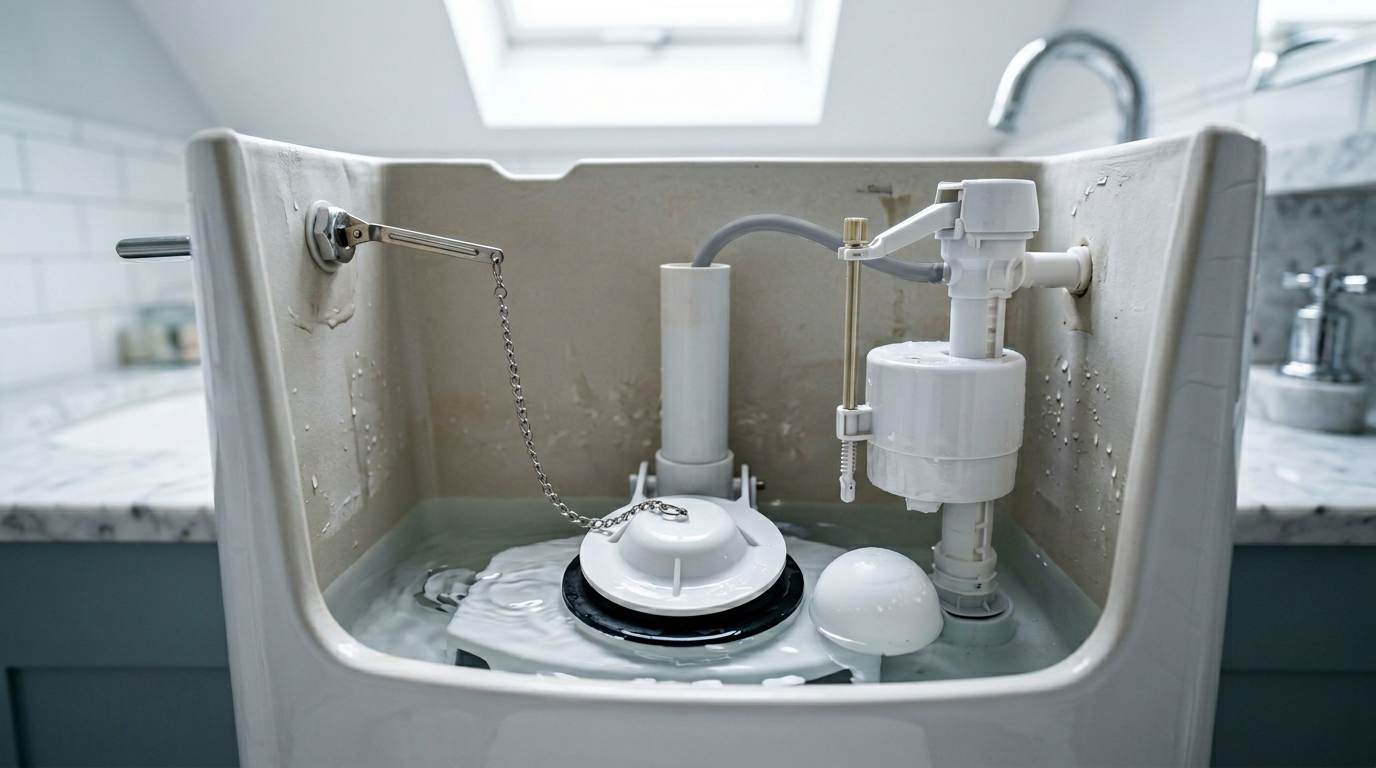
A toilet that trickles, hisses or refills itself for no apparent reason is one of the most common (and most expensive) plumbing faults we see in Sydney homes. Sydney Water estimates a silent running toilet can waste up to 60 litres an hour — that’s more than 500,000 litres a year if it’s never fixed. The good news is that 9 out of 10 running toilets are caused by one of just five issues, and most of them you can sort yourself in under half an hour.
How to confirm your toilet is actually running
Not every noisy toilet is running. Before you pull anything apart, do the dye test: drop a few drops of food colouring (or a dye tablet from your plumber) into the cistern, wait 15 minutes without flushing, then check the bowl. If the coloured water has found its way into the bowl, you have a leak between cistern and bowl. Water bills climbing with no obvious cause? Silent leaks are usually the answer.
1. A worn or warped flapper (outlet valve)
The flapper is the rubber disc at the bottom of the cistern that lifts when you flush and then seals the outlet until the next flush. In Sydney’s hard-ish water and chlorinated supply, flappers typically last 4–6 years before the rubber hardens, warps or picks up mineral buildup. When that happens, water slowly seeps past the seal and the cistern keeps refilling to make up the difference.
The fix: Turn off the isolation valve below the toilet, flush to empty the cistern, unhook the flapper chain and twist the flapper off its pegs. Take it with you to Bunnings, Reece or a plumbing supply shop so you can match it exactly — there is no universal flapper. The part is inexpensive and the swap takes about 15 minutes.
2. A chain that’s too short or tangled
The little chain between the flush lever and the flapper is often the actual culprit. If it’s too short, it holds the flapper slightly open. If it’s too long, it can get trapped under the flapper and stop it seating. Pull the cistern lid off, flush, and watch what happens. You want the flapper to slam down cleanly with 10–15 mm of slack in the chain. Adjust the chain length at the lever end or replace it if it’s corroded.
3. A faulty fill valve (inlet valve)
If water is constantly trickling into the cistern through the fill valve — even when the cistern is full — the fill valve isn’t shutting off. You’ll usually hear a faint hiss or see ripples on the water surface. Common causes are a stuck float, grit on the valve seat, or the whole fill valve simply reaching end of life.
The fix: Modern cistern fill valves (Caroma, Fluidmaster, Geberit) are designed to be replaced as a unit. They’re inexpensive at the plumbing supply shop and usually come with clear instructions. If you’re comfortable with an adjustable spanner and a bucket for drips, it’s a 30-minute job. If not — this is the one most people call us for.
Quick tip: If the water level inside the cistern is sitting above the overflow tube, your fill valve isn’t shutting off. If it’s sitting below the overflow but the toilet still refills every few minutes, you have a flapper or seal issue instead.
4. A cracked or failed flush valve seat
Less common, but worth knowing about: the plastic “seat” the flapper seals against can crack, pit or develop a mineral ring that the flapper can’t seal over. You can feel for it with a fingernail when the cistern is empty — it should be perfectly smooth. If it’s rough, a replacement is usually easiest done by pulling the cistern off and swapping the whole flush valve assembly. At this point most homeowners ring a plumber, and it’s fair enough.
5. A dual-flush button that’s jamming
Dual-flush buttons (standard on Australian toilets made in the last 20 years) have little plastic stems that can stick in the “down” position — especially if there’s any limescale buildup or a stray piece of loo paper. Lift the button cap off, check that both stems spring back freely, and give the mechanism a wipe with a damp cloth. A bottle of white vinegar and a soft toothbrush will clear most mineral buildup.
What about the whole thing: should I just replace the toilet?
If your toilet is under ~15 years old, repairing it is almost always cheaper than replacing it. If it’s older, has a cracked cistern, or is a single-flush unit still burning through 11 litres a flush, a modern 4-star WELS dual-flush will pay for itself in water savings within a few years. We’ll give you a written quote for a same-position replacement — the price varies with the pan you choose.
When to call a plumber
Call us if: the leak is between the cistern and the floor (a failed cistern-to-pan gasket), the toilet is rocking on its base, there’s water seeping from the pan connector, or you’ve tried the above and the cistern still won’t stop filling. These usually mean a flange, seal or hidden pipe issue that needs a proper look.
Need a hand? Southern Star Plumbing fixes running toilets right across Sydney — usually same day. Call 0432 304 609 or request a free quote online. If it turns out you also have weak flow at the taps, our guide on low water pressure walks through the most common causes.