
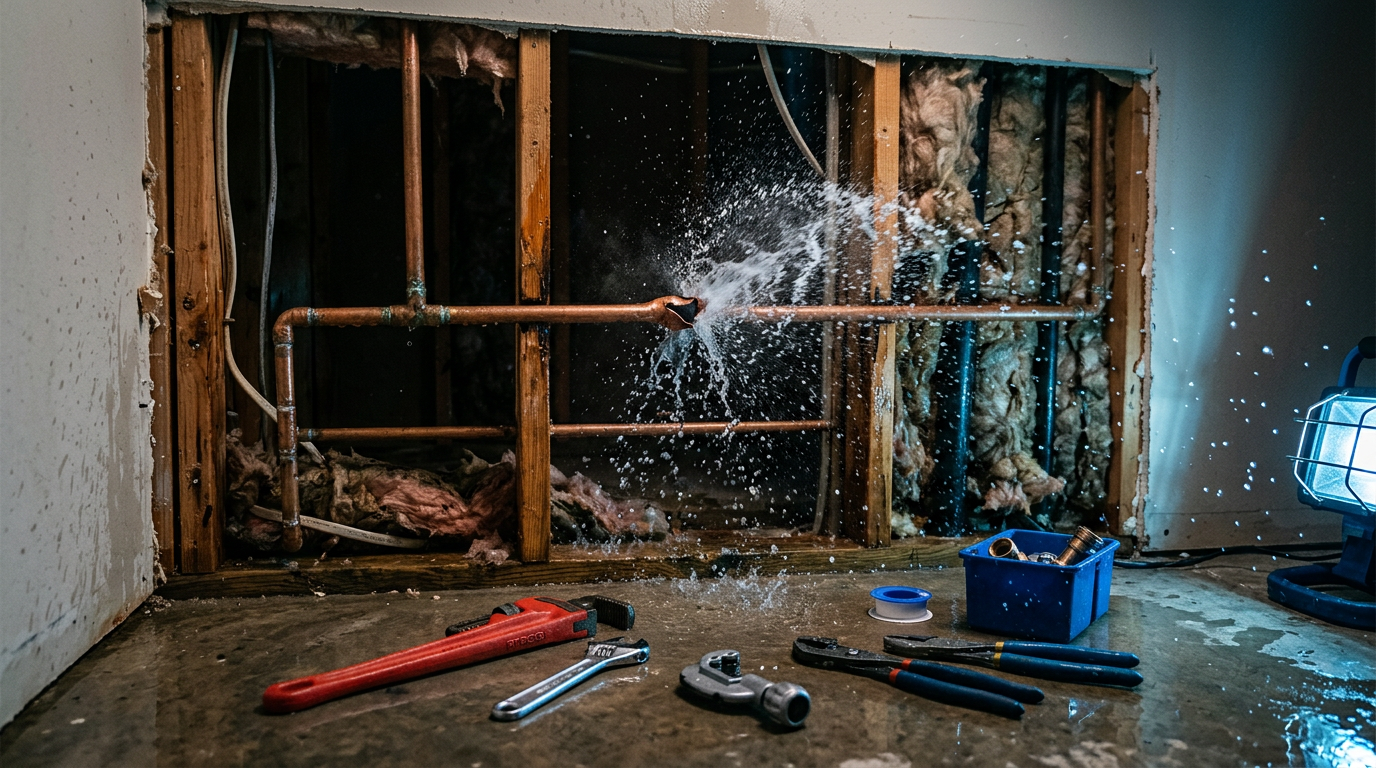
A burst pipe is the plumbing emergency most Sydney homeowners will deal with at least once. It happens for all sorts of reasons — a frozen fitting after a cold snap, internal corrosion in old galvanised pipe, a nail hit during renovations, or simply a joint that’s given up at 3am. What matters is that you act quickly and in the right order. Here is the exact five-minute sequence we recommend to customers.
Minute 1: Shut off the water at the mains
Nothing else matters until the water stops. Every Sydney home has a main water stop tap. It’s almost always at the front of the property, close to the water meter, usually in a green plastic meter box in the lawn or garden bed. Turn it clockwise (“righty-tighty”) until it stops. On newer homes this is a quarter-turn ball valve; on older homes it may be a gate valve that needs several full turns.
If the burst is clearly coming from a hot water line and the rest of the house still needs water, you can instead shut the isolator on the hot water system and the individual stop cocks under sinks. But when in doubt — kill the mains.
Do this now, before you need it: Go find your mains tap today. Confirm it turns. WD-40 or a plumber’s service will sort any that don’t. Saving those 90 seconds at 3am may save your floorboards.
Minute 2: Cut the power to affected areas
If the burst is anywhere near electrical outlets, the switchboard, downlights, or the hot water system, flip the main switch at the meter board. Water and electricity kill people every year. Don’t stand in water to do it — if you can’t reach the board safely, leave the property and call an electrician and us from outside.
Minute 3: Drain the pipes and contain the damage
Once the mains are off there will still be water in the pipes wanting to get out. Open the lowest cold tap in the house (usually a laundry tub or outside garden tap) and the highest hot tap (a second-floor shower). This drops the pipe pressure to zero and stops more water pouring out of the split.
While that drains, start containing. Grab towels, a mop, any large containers you have. Lift rugs, skirt furniture away from the wet area. If water is coming through the ceiling, put a bin underneath and — if you’re comfortable doing so — poke a small hole in the plasterboard with a screwdriver directly under the heaviest bulge. Counter-intuitive, but a controlled release into a bucket is much better than the whole ceiling coming down at once.
If water is coming through a ceiling, the safest assumption is that there is more up there than you can see. Keep people out of that room until a plumber clears it.
Minute 4: Document everything for insurance
Before you start cleaning up, pull out your phone and take photos and video of everything. The source of the leak if you can see it, the water on floors, affected furniture, walls, ceilings, any contents damage. Record the time. If you have an existing plumbing inspection report or previous invoices, have them ready.
Most home and contents policies in NSW cover sudden burst pipe damage but specifically exclude damage from long-term leaks. Documenting a clear, sudden event — with time-stamped photos and a plumber’s report — is the difference between a paid claim and a denied one.
Minute 5: Call a licensed plumber
Call us (or any 24/7 licensed Sydney plumber). Have this information ready — it gets a plumber to you faster and better prepared:
- Your address and nearest cross-street.
- Whether the mains are off and the power is isolated.
- Where the leak is (“bathroom wall near the shower”, “under the kitchen sink”, “coming through the ceiling from the bathroom above”).
- Pipe type if you know it (copper, PEX, galvanised, PVC).
- Approximate age of the house.
- Whether it’s a hot or cold line (if you can tell).
What a plumber will do when they arrive
A licensed plumber will confirm isolation, expose the failed section, cut back to good pipe on either side, and replace the failed length. For copper that means soldered or press-fit joints; for PEX, crimp or push-fit. If your home still has old galvanised steel pipe, a patch repair is usually false economy — the rest of the system is the same age and heading the same way, so we’ll usually recommend and quote a staged re-pipe.
Preventing the next one
Burst pipes rarely come out of nowhere. Warning signs that your pipes are nearing end of life include weak flow that’s gotten worse over years, discoloured water from a cold tap that’s been off overnight, visible corrosion or green patches on copper joints, and higher water bills with no obvious leak. If you’re seeing any of those, booking a preventative inspection is a lot cheaper than an emergency callout.
Burst pipe right now? Call Southern Star Plumbing on 0432 304 609 — we carry stocked vans and can be on-site across most of Sydney within the hour. Worried about hidden damage? Our guide on spotting a hidden water leak is worth a read once the emergency is sorted.