
Before you call us — do this
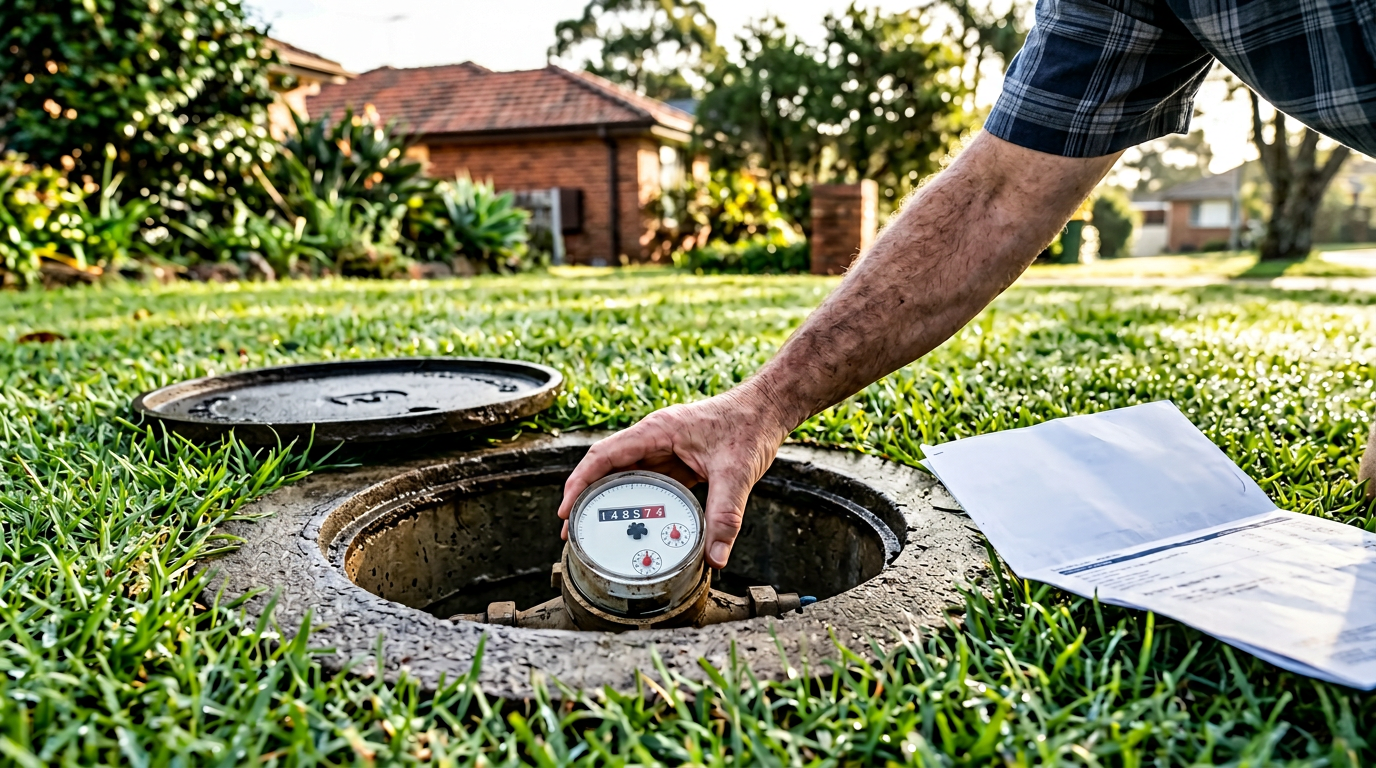
- Take a Sydney Water meter reading tonight before bed. Don’t use water for 2 hours. Read it again in the morning. If any dial moved — especially the small leak-indicator wheel — you have a leak.
- Drop blue food dye in each toilet cistern. Wait 15 minutes. Colour in the bowl = leaking flush valve = the most common cause of a Sydney Water bill spike.
- Walk the boundary at sunrise. Wet patches, suspiciously green grass, soggy lawn = likely underground leak.
- Don’t pay the spike-bill yet. If a concealed leak is found and fixed by a licensed plumber, Sydney Water has a hardship/concealed-leak allowance worth applying for.
The average Sydney household water bill is roughly a few hundred dollars a quarter. When one arrives that’s several times higher than usual — or, in some of the worst cases we’ve been called to, more than ten times higher — it gets your attention. The good news: 9 times out of 10 the cause is one of a small list of culprits, and several of them are DIY-fixable in 20 minutes.
Here are the 8 most common causes of a sudden Sydney water bill spike, ranked by how frequently we actually find them on a callout. Work through them in order — the more common ones at the top will catch the majority of cases before you need to bring in a plumber.
The 30-second meter test — do this first
The single most useful diagnostic for any water bill mystery is sitting at the front of your property. Sydney Water meters have two parts you care about: the main register (cubic metres — whole numbers and decimals) and a tiny leak-indicator wheel that spins on the slightest flow.
- Tonight, last thing before bed: open the meter pit lid. Take a clear photo of the dial. Don’t flush a toilet, run a tap or use the dishwasher overnight.
- First thing in the morning, before anyone uses water: photograph the dial again.
- Compare. If a single digit has changed, or the leak-indicator has moved at all, water is flowing somewhere on your property while nobody is using it. That’s a leak.
To narrow it down: turn off the main isolation valve where the supply enters the house (usually on the front of the property, near or after the meter). If the meter still moves, the leak is between the meter and the isolation valve — underground, slab or wall. If the meter stops, the leak is inside the house.
The 8 causes, ranked by frequency
1. Silent toilet leak (the #1 cause — about 35% of cases we attend)
A faulty flush valve or warped flapper lets water trickle continuously from cistern to bowl. You don’t hear it because the cistern keeps refilling silently. A bad flush valve can leak 30–60 litres an hour, 24 hours a day. Over a 90-day Sydney Water billing cycle that’s 65,000–130,000 litres — the equivalent of running a tap for two months.
How to test it: drop a few drops of food dye in the cistern, wait 15 minutes without flushing, look at the bowl. Colour in the bowl = leaking flush valve.
Fix: a flush valve kit from any hardware store and 20 minutes work for the DIY-confident. Otherwise call us for a cistern rebuild — we’ll quote it on site.
2. Irrigation valve stuck open (about 18% of cases)
Common in homes with automatic sprinkler systems — a solenoid valve corrodes or jams partly open and the system runs continuously, often unseen if the sprinklers are pop-up types or set to night-time cycles you don’t hear. Garden beds will be soaked or soggy.
How to test it: turn off the irrigation system at the controller and re-do the overnight meter test. If the meter stops moving, the irrigation is the problem.
Fix: a replacement solenoid valve, or a full controller and valve service. Cost depends on which valves and how the controller is set up — we’ll quote on site.
3. Concealed underground or slab leak (about 15% of cases)
The expensive one. A pinhole or crack in a copper or polybutylene line under the slab, in a wall cavity, or in the supply pipe between the meter and the house. Symptoms: damp patches on tiled floors, warm spots (if it’s a hot water line), unexplained mould on a wall, lush green strips of lawn, or a meter that moves continuously even with everything turned off inside.
How we find it: acoustic leak detection (ground microphone) and thermal imaging. Most concealed leaks can be located within 30–60 minutes without breaking up the slab. See our leak detection service page for details.
What it costs: we quote leak detection and any repair work separately, since the repair depends heavily on the location and access. Important: concealed leaks may be eligible for Sydney Water’s concealed-leak allowance — keep your plumber’s written report and invoice.
4. TPR valve dripping continuously on hot water unit (about 10% of cases)
The temperature-and-pressure-relief valve on a storage hot water tank. A small drip during heating cycles is normal. A continuous stream is not — it can waste 5–15 litres per hour, day and night, often draining unseen to a tundish at the side of the house.
How to test it: walk to your hot water unit and look at the small drain pipe coming from the TPR valve. Touch it. Wet, with a slow but constant trickle = problem.
Fix: TPR valve replacement — a quick job for a licensed plumber. If a new TPR valve still drips, the tank is over-pressurising and may be near end-of-life — see our when to replace your hot water system guide.
5. Pool auto-fill valve stuck open (about 8% of cases — in homes with pools)
If you have an automatic top-up valve on the pool, it can stick open after evaporation drops or rain raises the level. We’ve seen this run unnoticed for months, particularly on rental properties.
Fix: service the auto-fill valve or convert to a manual top-up.
6. Misread meter or estimated bill (about 6% of cases)
Sydney Water reads meters quarterly, but where the meter is hard to access (overgrown garden, locked gate, parked car), they may estimate. Estimates eventually correct themselves — usually as a much larger “true-up” bill once the actual reading is taken. The bill spike isn’t real consumption, just catch-up.
How to check: look on your bill for an “E” or “estimated” tag next to the previous reading. If the prior bill was estimated and this one isn’t, that explains some or all of the spike.
Fix: contact Sydney Water for a rebill schedule or hardship arrangement. Clear the access path so future readings are accurate.
7. Garden tap dripping or leaking outside (about 5% of cases)
Outdoor taps are exposed to UV and temperature swings — washers fail faster than indoor taps. A dripping outdoor tap on a paving slab can run for months unnoticed because it just disappears into a drainage point.
Fix: a garden-tap replacement, ideally with a quarter-turn ball valve so the next washer change is easier. We’ll quote it on site.
8. New high-use appliance or behaviour change (about 3% of cases — not a leak)
Sometimes the spike is real consumption you’re not accounting for. A new dishwasher being run twice a day, a teenager moved home with longer showers, a new pool filled, a renovated garden being established (~150 L per square metre to establish lawn), summer pool top-ups, or a guest staying for an extended period.
Compare the bill’s daily-litres figure against your normal — if it’s consistent with extra usage you can identify, it’s probably real.
The 1% — rare but worth knowing
Other low-frequency causes we’ve seen: a neighbour’s irrigation accidentally connected to your meter (boundary disputes go very deep here), a meter that’s actually faulty (Sydney Water will test it on request — usually free if it’s wrong), or a stuck-open auto-fill valve on a domestic water tank or rainwater system.
How to read your Sydney Water bill
Two charges drive your total:
- Service charges — fixed quarterly fees for water service, sewer service, and stormwater. These don’t change with usage.
- Usage charge — volumetric, billed in kilolitres (kL = 1,000 litres). The current Sydney Water residential rate is set by Sydney Water and can be checked on your bill or at sydneywater.com.au — the rate steps up once daily usage exceeds the lower-tier threshold. A serious leak running for a quarter can easily add 100,000 litres or more to the bill.
The bill shows current vs previous reading and an “average daily use” comparison. If your average daily use has doubled and the previous reading wasn’t estimated, that’s your evidence that the consumption is real — either a leak or a behaviour change.
What Sydney Water will and won’t refund
Concealed leak allowance — will refund (sometimes)
Sydney Water has a concealed leak allowance that may credit part of your bill if all of these apply:
- The leak was on hidden pipework — under the slab, in a wall, or underground — not visible drips.
- The leak was repaired by a licensed plumber within a reasonable time after detection.
- You submit a written application via the Sydney Water customer-service portal with the plumber’s invoice and a brief report describing the location and nature of the leak.
The allowance typically credits the volumetric portion above your normal usage — it doesn’t reduce the bill back to a normal quarter, but it can take a meaningful chunk off the total when the cause was a genuinely concealed leak.
What Sydney Water won’t refund
- Toilet leaks (visible at the cistern).
- Dripping taps and visible fixture drips.
- Garden tap leaks.
- Irrigation system overspray or stuck valves on garden systems.
- Pool top-ups and auto-fill problems.
- Estimated-meter catch-ups (these are real consumption from earlier quarters).
If you’re struggling to pay
Sydney Water has a financial hardship program (PaymentAssist) that can split a large bill into instalments, freeze interest, and connect you with EAPA (Energy Accounts Payment Assistance) for vouchers. Call Sydney Water on 13 20 92 before the bill is overdue — they’re much more flexible if you call early.
When to call us
Call a plumber if any of these are true:
- Overnight meter test shows water moving and you can’t identify the source.
- Wet patch on a slab, wall or yard with no obvious cause.
- Hot water unit’s TPR valve is dripping continuously.
- Concealed-leak allowance application requires a licensed plumber’s report.
- Your bill has spiked twice in a row and you’ve already chased the obvious causes.
Our leak detection service uses acoustic and thermal imaging to find leaks without breaking up the slab — same-day appointments across most Sydney suburbs.
Prevention checklist — never get a spike-bill again
- Read your meter monthly. Take a phone photo of the meter on the same day each month. A spike is obvious months before the bill arrives.
- Test toilets twice a year with food dye. Replace flush valves at the first sign of seep-through.
- Inspect outdoor taps quarterly. Replace washers at the first drip.
- Service irrigation valves annually — before the summer season starts.
- Check the TPR valve drain on your hot water unit every few months.
- Watch the lawn. Suddenly verdant strips on a brown lawn = water leak under the surface.
Frequently asked questions
Why has my Sydney Water bill suddenly doubled?
The most common cause is a silent toilet leak (up to 60 L/hour), followed by a hidden pipe leak, an irrigation valve stuck open, a continuously dripping TPR valve on a hot water tank, or a misread meter. Run the 30-second overnight meter test: any movement when nothing is using water = leak.
Will Sydney Water refund a high bill caused by a leak?
Sometimes. Sydney Water has a “concealed leak allowance” that may credit part of the bill if the leak was on hidden pipework (slab, wall, underground), repaired within a reasonable period, and a licensed plumber’s report is submitted. Visible drips and toilet leaks aren’t covered. Apply via the Sydney Water website with your plumber’s invoice and report.
How do I check if I have a hidden water leak?
Take a meter reading at night, don’t use water for 2 hours, take another reading. Movement on any dial — especially the small leak-indicator wheel — confirms a leak. To narrow it down, isolate the house at the main valve: if the meter still moves, the leak is between meter and house; if it stops, leak is inside the house.
Who pays for a leak in Sydney — the homeowner or Sydney Water?
From the property boundary into the house, all pipework is the homeowner’s responsibility. Sydney Water owns the pipe from their main to the connection point at your front boundary. If your investigation finds the leak is on Sydney Water’s side, they’ll attend free.
Can a running toilet really cost hundreds of dollars?
Yes. A faulty flush valve can leak many tens of litres per hour, 24 hours a day. Over a Sydney Water 90-day billing cycle that easily adds up to tens of thousands of litres at the current Sydney Water tariff — usually a few hundred dollars added to your bill. The fix is often a cheap flapper kit and 20 minutes work, or a cistern rebuild by a licensed plumber.
How accurate are Sydney Water meters?
Very. Modern Sydney Water meters are factory-calibrated to within 2% accuracy, and they typically read slightly under-actual rather than over — the meter is rarely the cause of a spike. If you suspect yours is wrong, Sydney Water will test it on request; if it’s reading high, they’ll replace it and credit the bill. If it’s reading correctly, there’s a small testing fee.
Stuck on a leak you can’t locate? Our acoustic and thermal leak-detection equipment finds 95% of concealed leaks without breaking up tiles or excavating — same-day appointments across Sydney. We’ll provide a written report you can use for the Sydney Water concealed-leak allowance application. Call 0432 304 609 or request a free quote.